US Envoy Signals Disagreement With Israel on Syria
Special envoy Tom Barrack told an online audience that Washington prefers Damascus control over the Druze-majority province of Suwayda, a stance that contrasts with Israeli strategy in the south.
By Priya Patel ·
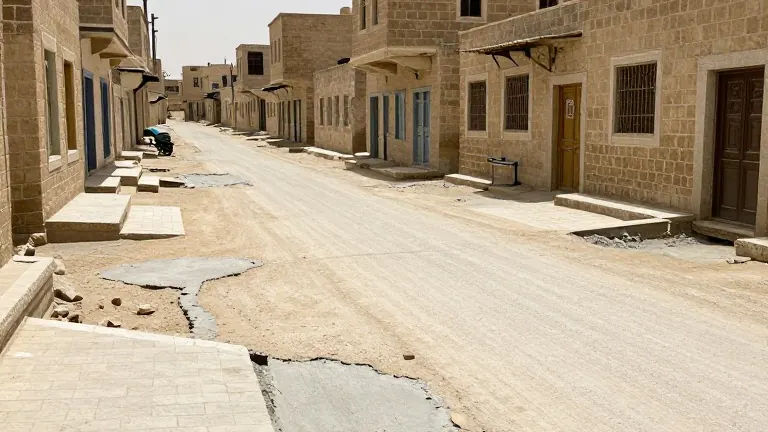
US special envoy Tom Barrack recently signaled a split in approach between Washington and Jerusalem regarding the future of southern Syria. Speaking to Australian media personality Mario Nawfal on Friday, Barrack discussed the status of Suwayda, a governorate where the central government in Damascus has not fully reasserted control since the fall of the Assad regime in December 2024.
Barrack referenced a specific Druze sheikh, widely identified as Hikmat al-Hijri. Al-Hijri leads a political and religious faction in Suwayda, and his armed National Guard has been accused of receiving support from Israel. Many observers interpret Barrack’s comments as a direct message to Israel that American backing for a new Syrian government does not equal approval for local proxies aligned with Israeli interests.
The diplomatic friction stems from differing views on the new leadership under President Ahmed al-Sharaa. US President Donald Trump has cultivated a strong relationship with al-Sharaa, viewing stability as essential for rebuilding after 13 years of war. Conversely, Israeli Prime Minister Benjamin Netanyahu has maintained a harder line. Israel seized land in Quneitra governorate immediately after the Assad collapse and has since bombed Syrian ministries and harassed residents in the south.
Navvar Saban, a researcher at the Arab Center for Contemporary Syrian Studies, noted that Barrack’s message was clear. “Israel backing [al-Hijri] does not equal American backing,” Saban said. “Washington has prioritised an agreement with Damascus while Israel retains its own security demands and relationship.”
Tensions in Suwayda escalated in July 2025 after sectarian killings between Bedouin tribes and Druze residents. Government forces reportedly fought on the side of the Bedouins, resulting in heavy Druze casualties. Israel intervened by attacking Syrian forces entering the province and has since sought to build influence with local leaders like al-Hijri, who oppose Damascus’s new leadership.
Nanar Hawach, a Syrian analyst who visited the region in September, stated that Washington is building a partner in Damascus, while Israel prefers a government weak enough to rely on Israeli protection. “Washington is building a partner in Damascus while Israel appears to prefer a Damascus that is too weak to assert itself in the south,” Hawach said.
A trilateral agreement signed in Amman in September 2025 called for an independent international commission to investigate the July violence. Despite the accord, the province remains in a deadlock. Residents face pressure from the government in areas such as salaries and education, and analysts say credible accountability for the 2025 events is necessary to rebuild trust.
Source: Al Jazeera