Isisraelis vote Tuesday as war continues
Polls suggest neither bloc will secure the 61 seats needed to form a government, leaving the door open for a third election cycle within three years.
By Isabella Morales ·
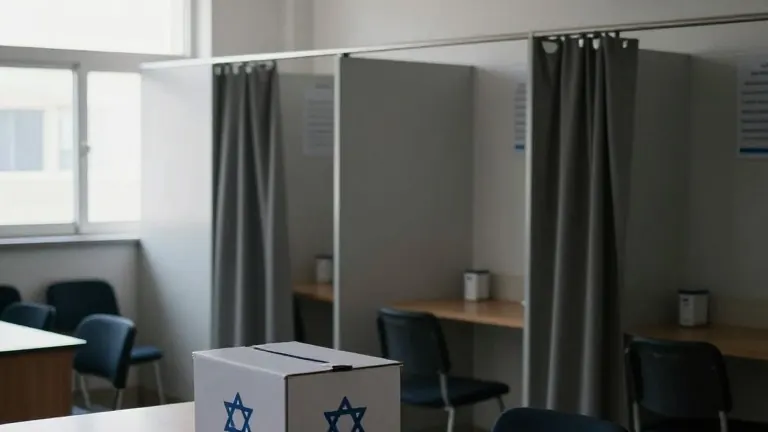
Voters in Israel cast their ballots Tuesday in a Knesset election that polls indicate will not produce a decisive winner. The race pits Prime Minister Benjamin Netanyahu’s right-wing coalition against a disparate group of parties united only in their opposition to his leadership. Most recent surveys show that neither side is likely to capture the 61 seats required for a majority, creating a political stalemate that could last for weeks or months.
The vote takes place against the backdrop of a multi-front war that has persisted since the October 7, 2023, Hamas attacks. Combat continues in Gaza, Lebanon, and Syria, and tensions remain high with Iran. Netanyahu argues that his government needs time to complete military objectives, particularly regarding the threat of an Iranian nuclear weapon. He has positioned himself as the only leader capable of governing without relying on Arab parties, a stance he claims is essential for security.
Donald Trump offered his support for Netanyahu last week, warning that the United States would have to conduct military operations itself if a different leader took power. Trump stated that if Israel has a leader other than Netanyahu, America would not be inclined to continue the work. Netanyahu has used this endorsement to argue that he is the best partner for Washington in preventing Iran from acquiring nuclear capabilities.
On the other side of the political divide, former military chief Gadi Eisenkot leads the centrist Yashar party and is the front-runner to form a government if the opposition gains a plurality. Eisenkot lost his son and two nephews in the war and served in the war cabinet alongside Netanyahu. He criticizes Netanyahu for using fear-mongering, specifically referencing an AI-generated image of a nuclear explosion over Tel Aviv that Netanyahu posted on social media over the weekend.
Eisenkot has promised to launch a state inquiry into the intelligence failures that preceded the October 7 attacks, a step Netanyahu has previously blocked. His campaign includes a higher proportion of female candidates compared to the male-dominated Netanyahu coalition. Supporters describe him as a pragmatic leader who prioritizes the country over personal interests.
Voter turnout among Arab Israelis will be a critical variable in the final count. Arab citizens make up about 20% of the population, and higher participation in their bloc could prevent Netanyahu from forming a government. Jehad Abomoch, a cafe owner in Baqa al Gharbiya, said his community is motivated to vote because they have faced social and economic challenges under the current government for four years.
Two new parties focused on conscripting ultra-Orthodox Jews for military service are also polling near the threshold for Knesset entry. Their success could shift the balance of power in either direction. If neither bloc secures a majority, politicians may negotiate for weeks to form a coalition or a minority government. If those efforts fail, Israel will hold another election, a scenario that has occurred five times between 2019 and 2022.
Yohanan Plesner, president of the Israel Democracy Institute, stated that an indecisive outcome is the most likely result. He noted that while some politicians may switch sides to form a government, most are reluctant to trigger another immediate election. The counting of votes began as polls closed, with results expected to emerge gradually over the coming days.
Source: CBS News